What to Expect in a Public Speaking Workshop: No Trust Falls
The calendar invite lands on a Tuesday afternoon. Communication Workshop, ninety minutes, attendance expected. And something in your chest drops about six inches.
You've been here before. The circle of chairs. The facilitator with relentless energy who wants everyone to share one word about how they're feeling today. That awful arithmetic where you count the people ahead of you in the go-around so you know exactly when your turn arrives, which means you hear nothing anyone else says.
If that's the picture in your head, of course you'd rather skip it.
So let's take the mystery out of the thing. Below is what actually happens inside a speaking workshop designed for people who dread speaking workshops, including the long stretches where nothing at all is asked of you. Decide from information instead of from a memory of the worst corporate training you ever sat through.
What Actually Happens in a Public Speaking Workshop?
A well-designed speaking workshop teaches nervous system regulation first and speaking second. You learn, observe, and practice at whatever pace feels safe.
Here's the walkthrough.
The first fifteen minutes: you're a spectator, with no introductions around the group and no icebreaker to sit through. You show up, you settle in, and someone talks to you about why your body does what it does when you're asked to speak. That's the whole ask. If you spend those fifteen minutes with your camera off and your shoulders somewhere near your ears, that's fine.
The teaching section: the part that reframes everything. This is where we get into what's happening physiologically when your throat tightens, your thoughts scatter, or your voice starts moving faster than your brain, which is exactly why your body reacts before your brain does. Most people have spent years assuming they're the problem. Learning that their nervous system is doing exactly what it evolved to do lands as an enormous relief, and I watch it happen on faces every single time.
The practice: private, in your own body. You'll be guided through a regulation practice that you do sitting where you are, and nobody watches you, nobody evaluates you, and there's no group feedback round. You're doing something with your own breath and your own body, and the only person who knows how it went is you.
Volunteer work: optional and genuinely so. Later in the workshop, people who want to try something out loud get to. Some sessions have six volunteers, some have just one, and both are fine, since the workshop is designed to be complete for you whether or not you say a word.
The close: what to carry out the door. You leave with a name for what's been happening to you and one practice you can use in your next meeting.
That's it: no trust falls, no power poses in front of a mirror while strangers clap. If any of this sounds like the version you'd actually attend, the upcoming session times are listed further down this page.
Why Do Smart, Capable People Dread Speaking Workshops?
Most workshops start with exposure. Being put on the spot before your body feels safe teaches your nervous system that speaking equals danger, which deepens the pattern.
You're an engineer, a product lead, a founder, a director. You've solved harder problems than this one and you know it, which is exactly why the fear feels so humiliating. You've also tried things: Toastmasters, a speaking coach, three books, and a meditation app.
Most of those approaches run on the same assumption, that doing the scary thing enough times will make the fear wear off. Exposure works beautifully for some people. For others, every unprepared, unregulated repetition adds another data point to the file marked speaking is dangerous. You white-knuckle through the talk, you survive it, and your body files away the panic rather than the survival.
So you get better at hiding it. You over-prepare, or you speed up, or you go quiet and let someone else say the thing you were about to say. Then you watch them get credit for it.
Your nervous system has learned something here, and it's been faithfully protecting you ever since. Take the speaking pattern quiz if you want to know which pattern you're running.
Will You Be Called On or Put in Front of the Group?
Participation is invited and never assigned, so no, you won't be called on. You can attend the entire workshop without participating and still walk away with what you came for.
I want to be as clear as I can here, because this is the single question that keeps people from registering.
You won't be called on by name, asked to introduce yourself to the group, or pulled into a breakout room with a stranger to practice your elevator pitch. Nothing gets sprung on you.
The workshop assumes you already know how to push through discomfort. You've been doing it for years, and it hasn't fixed anything. So we're going to try the opposite approach and see what your body does when it isn't bracing for the next demand.

How Is This Different From Toastmasters or a Speaking Coach?
Toastmasters builds repetitions and coaching polishes delivery, but CORE Repatterning™ works at the nervous system level, where speaking fear is actually stored.
Think about what you already know how to do. You can structure an argument, build a deck that lands, and hold a room's attention when you're talking about something you've spent three years building. Your technique is fine.
Something else takes over when the stakes rise. For a lot of people, practicing more isn't the answer, because technique lives in the part of you that goes offline the second your body decides you're in danger.
CORE Repatterning™ works underneath the technique. It addresses the pattern your body learned, often long before your career started, that says being seen and heard carries risk. When that shifts, the skills you already have finally have somewhere to land.
The workshop is your introduction to that method. Ninety minutes, no commitment, and you get to find out whether this way of working makes sense to you before you go any further.
What Do You Actually Walk Out With?
You leave with a name for your speaking pattern, one regulation practice you can use immediately, and a different understanding of what your fear has been doing for you.
Three specific things.
Language for what's been happening. Most people have never had words for their pattern, which means they've been calling it a character flaw. Naming it changes what you can do about it.
One practice that works in under two minutes. Usable before a meeting, in a bathroom stall, in your car in the parking garage, no equipment and no visible weirdness.
Evidence from your own body. You'll feel something shift during the session. Small, maybe, but yours, and enough to make the next step feel worth taking.
How Do You Get the Most Out of Ninety Minutes?
Match the session to your energy, bring a real situation to mind, and skip trying to prepare in advance. Showing up is the actual assignment.
Come to the one that fits your energy, not your calendar. If mornings are when you're sharpest, take the 9am session. Showing up depleted at the end of a brutal day gives you less to work with.
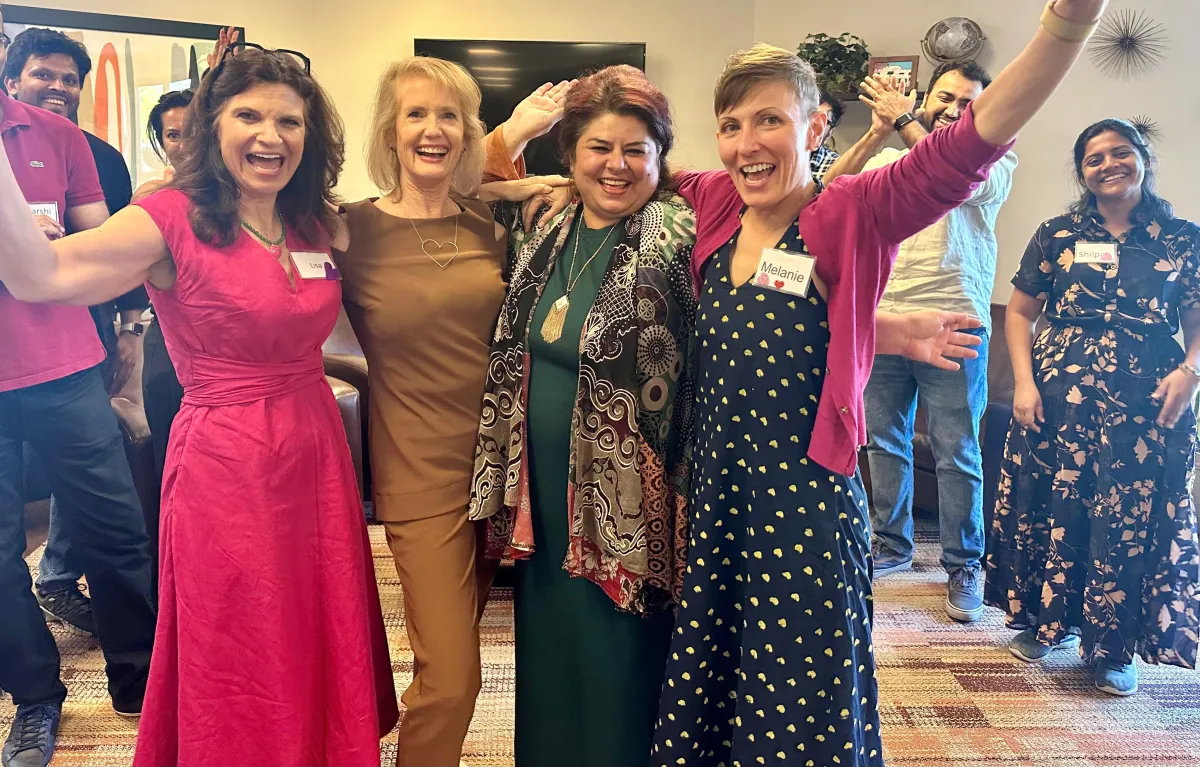
Choose in-person if you can get there. Something different happens in a room with other people who understand exactly why you're sitting there. The San Jose sessions have a warmth to them that's hard to describe.
Bring the situation that's actually on your mind, whether it's the presentation in three weeks, the all-hands, or the interview. Having a specific scenario makes the practice concrete.
Skip the pre-worry. You don't need to prepare anything. Turning up is the entire assignment.
Upcoming Sessions
Virtual: Thursday, August 20 at 9:00 am PT
Tuesday, August 25 at 12:00 pm PT
Monday, August 31 at 1:00 pm PT
In person: (920 Saratoga Ave, Suite 108, San Jose, parking at the back of the building) Sunday, August 30 at 1:00 pm PT
Save your seat at The Speaking Workshop for People Who Dread Speaking Workshops.
Frequently Asked Questions
Is the speaking workshop free? Yes, it runs as a standalone experience and as an introduction to the Yes You Can Speak methodology, with no cost to attend.
How long is the workshop? The workshop runs ninety minutes, including time for questions at the end.
Do I have to turn my camera on? No, cameras are welcome and never required. Plenty of people attend their first session with the camera off and turn it on for the second one.
Will I be asked to speak in front of the group? Only if you volunteer. There are no assigned turns, no go-arounds, and no breakout rooms with forced participation.
What if I've already tried Toastmasters and it didn't help? Then you're exactly who this was built for. Toastmasters is a repetition model, and this workshop starts with your nervous system, which is a different entry point entirely.
Is this useful if I only get nervous on video calls? Yes, and video calls often make the pattern more intense, since you're watching your own face while also managing your camera on video calls at the same time. The same regulation work applies here.
One More Thing
You've spent years being competent at difficult things. The fact that this one hasn't yielded to effort says nothing about your capability and everything about where the pattern lives.
In ninety minutes, with nobody making you do anything, you might leave with the first sense in a long while that this is workable.
Register for an upcoming session or, if you'd rather talk it through with a person first, book a free 15-minute chat.